
Goa · Culture & Festivals · 7 November 2026
Goa’s Narakasur Night: Myth, Music and the Meaning of Diwali
Neighbourhood craftsmanship, the victory of good over evil, and a celebration that cares for its neighbours.
Tags: Goa · Narakasur · Narkasur · Narak Chaturdashi · Diwali · Culture · Festivals
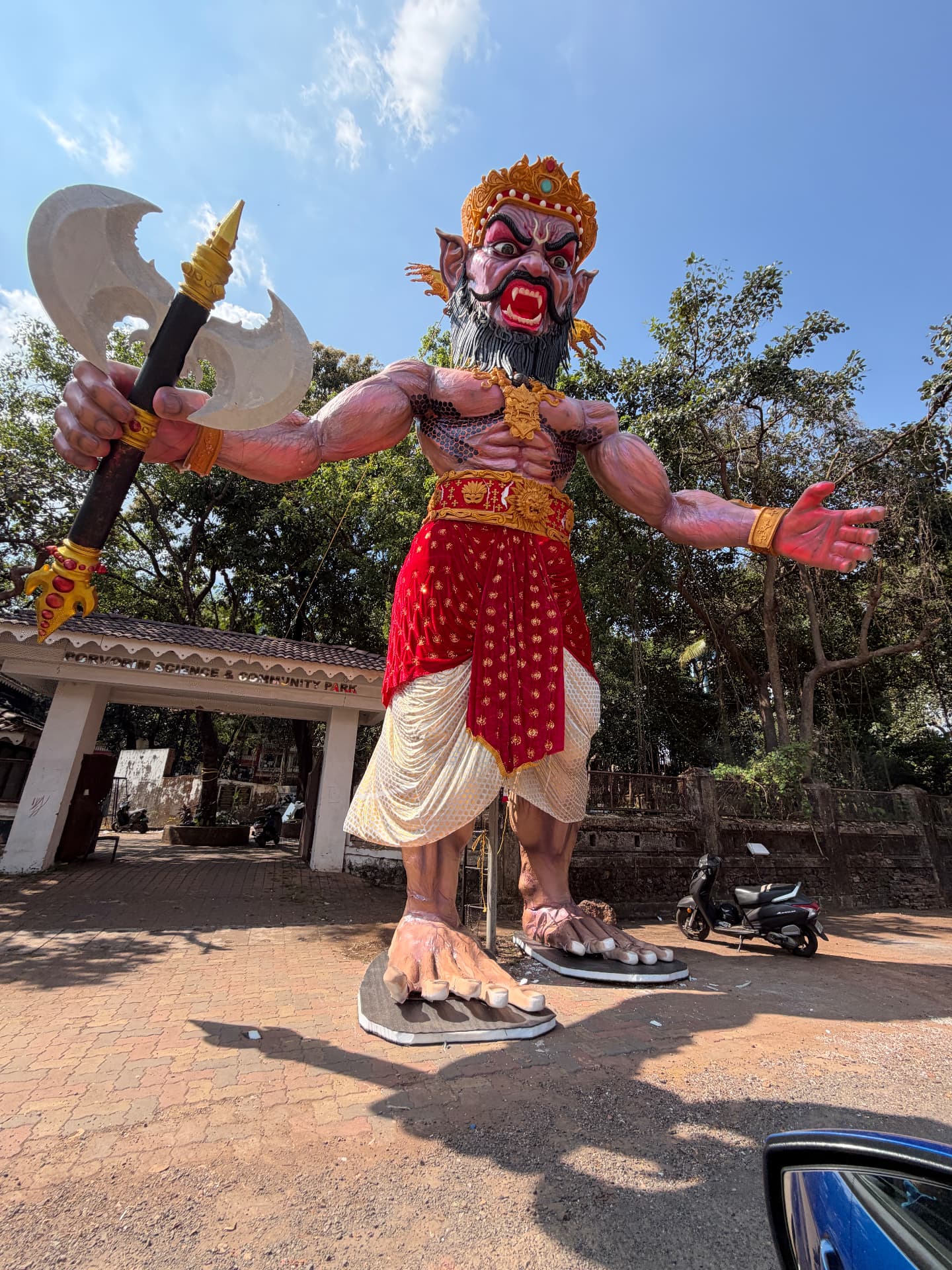
Before the lamps of Diwali brighten Goa’s homes, another spectacle captures attention: towering Narakasur figures with fierce faces, magnificent crowns and outstretched arms. On 7 November 2026, Goa prepares for this distinctive tradition ahead of Diwali on Sunday, 8 November, the date listed in Goa’s official 2026 public-holiday calendar.
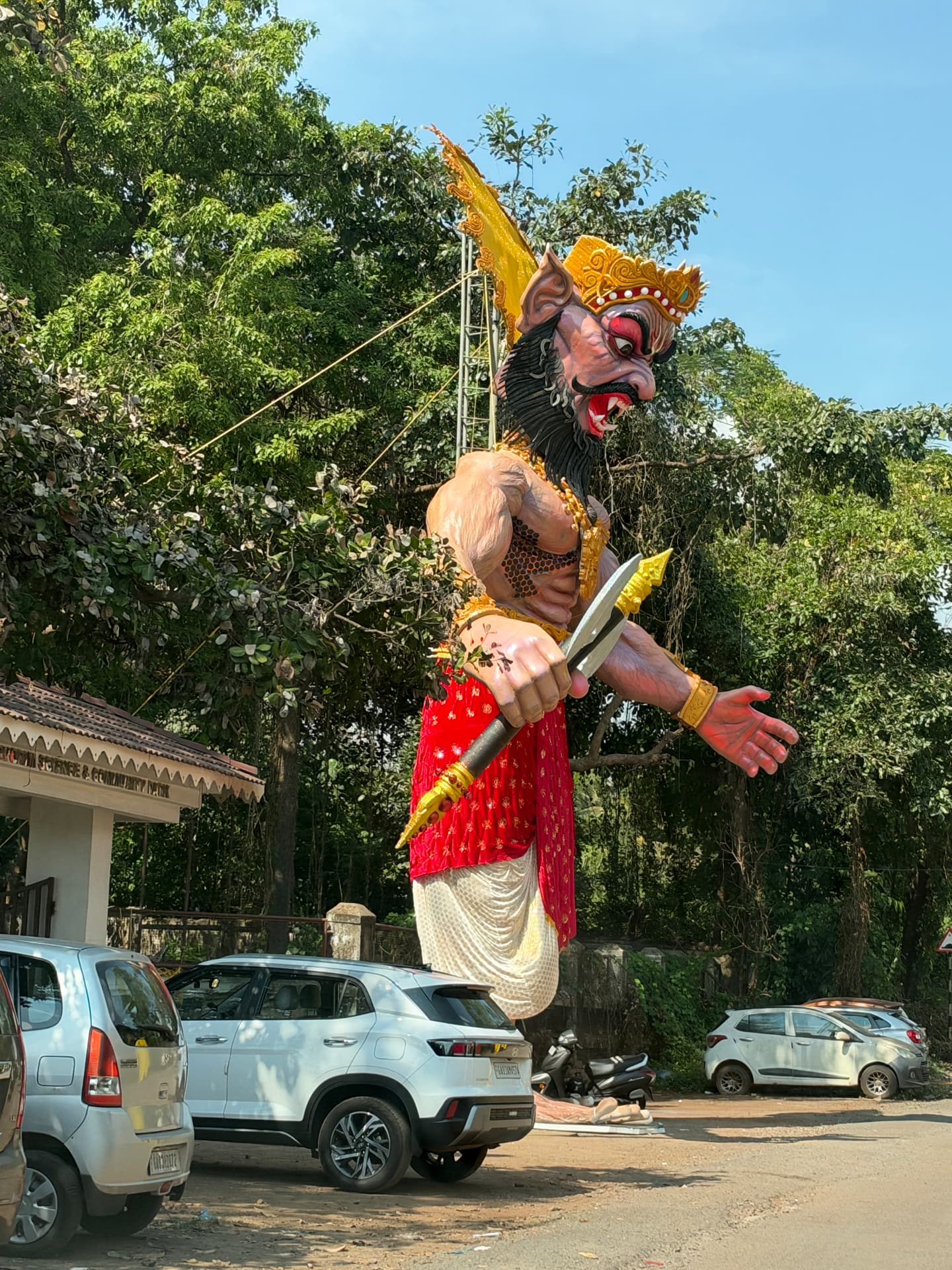
The photographs supplied with this article capture the visual drama. Against a clear blue sky, a giant Narakasur figure holds an enormous axe, its elaborate ornaments and colourful clothing revealing the imagination and craftsmanship behind the display.
The legend behind the spectacle
In the Hindu tradition associated with Goa’s celebrations, Narakasura—locally called Narkasur or Narakasur—is a demon king whose defeat by Lord Krishna represents the victory of good over evil. The effigies are traditionally burned at dawn, symbolically ending darkness and welcoming a new beginning. Goa’s Narak Chaturdashi celebrations bring this mythology into neighbourhood life through art, collective effort and festive gatherings.
For those who build the figures, the celebration also offers a chance to create something together. The imposing demon becomes a temporary neighbourhood landmark before its destruction completes the story.
When celebration becomes a concern
Two newspaper reports published on 7 November 2026 raise questions about how the tradition is changing.
Writing for The Times of India, Rajendra P. Kerkar describes an earlier approach using bamboo frames and seasonal grass. His report contrasts these materials with the growing use of plastic, thermocol and other non-biodegradable materials. It quotes environmental concerns about fumes from burning plastic, and recalls earthen lamps and traditional foods as part of Goa’s festive heritage.
In The Goan, Agnelo Pereira highlights residents’ concerns about powerful sound systems and music continuing late into the night. The report describes complaints of heavy bass shaking doors and windows, with older people, children, patients and working residents among those affected. These are reported residents’ experiences, not published measurements of the 2026 celebrations.
Pereira also distinguishes pollution monitoring from enforcement: measuring noise and air quality does not, by itself, resolve the disturbance experienced by nearby households. The report attributes noise enforcement to the district administration and police.
Together, the reports invite a thoughtful question: how can Goa preserve the excitement of Narakasur night while caring for everyone who shares its neighbourhoods?
Keeping the spirit of the festival alive
Community organisers can help by choosing traditional materials, avoiding plastic and thermocol in anything intended for burning, keeping music at considerate levels, and arranging a thorough cleanup. Recognising craftsmanship, storytelling and responsible celebration could give neighbourhood competitions an even richer purpose.
The burning of Narakasur carries a powerful message about overcoming destructive behaviour. That meaning becomes stronger when the celebration itself expresses care—for neighbours, public spaces and the natural world.
As Goa welcomes Diwali, may the creativity remain magnificent, the community spirit remain strong, and the light reach every home with joy and consideration. Happy Diwali!
About this article
Text and photographs supplied by T George; edited for publication on Indias.com with source checking. The photographer’s name was not supplied. The official holiday date does not establish the schedule of every local celebration. Sources checked on 7 November 2026.
Related articles
Related
Sources
- Ministry of Tourism — Diwali in Goa: effigies and dawn-burning tradition
- Goa government — Official public holidays for 2026 (Diwali: 8 November)
- Rajendra P. Kerkar, The Times of India — Goa’s traditional, eco-friendly Diwali sees a modern shift (7 November 2026)
- Agnelo Pereira, The Goan — Festive noise under scanner, but Narkasur revelry sparks concern (7 November 2026)